
WELCOME To ONEMOREDEV.io
ELIXIR SYSTEM DESIGN EXPERTS
Building Scalable, Fault-Tolerant Systems for 12+ Years Specialized in betting platforms, blockchain solutions, and AI applications
Our Expertise
Architecture Planning
We design robust, scalable architectures capable of handling millions of requests per day without performance degradation. Our team leverages Elixir’s lightweight processes and the BEAM VM to distribute workloads efficiently across nodes, ensuring consistent response times even during peak traffic. From load balancing strategies to horizontal scaling and caching layers, we build systems that grow seamlessly with your user base.
Fault-Tolerant System
Using Elixir’s OTP (Open Telecom Platform) framework, we implement systems that recover automatically from failures. Our designs include process supervision trees, fault isolation, and restart strategies that keep critical services running smoothly even when individual components fail. This approach ensures maximum uptime, reliability, and resilience across your infrastructure — essential for mission-critical applications.
Distributed Systems
We architect and optimize distributed systems that communicate reliably and perform consistently across multiple nodes and environments. Leveraging tools like Phoenix PubSub, message queues, and clustering, we design systems that can synchronize data, handle concurrent events, and maintain high throughput with minimal latency. Our team also focuses on observability, ensuring every component is monitored and measurable for optimal performance.
Performance Monitoring
We integrate advanced monitoring and observability tools to give you full visibility into your system’s health and performance. Using Prometheus, Grafana, and OpenTelemetry, we instrument your Elixir applications to track metrics, logs, and traces in real time. This allows for proactive issue detection, data-driven scaling decisions, and continuous optimization — ensuring your system remains reliable and efficient under all conditions.
Microservice Architecture
We specialize in building modular, maintainable microservice architectures using Elixir and the Phoenix framework. Each service is designed to operate independently, communicate via APIs or message brokers, and scale autonomously based on workload. This approach enables faster development cycles, easier maintenance, and seamless integration with existing systems or third-party services — ideal for complex enterprise-grade applications.
Real-Time Application Architecture
Real-time systems are at the heart of modern digital experiences — from betting platforms to chat applications and live dashboards. With Phoenix Channels and WebSockets, we design architectures that deliver live data updates with sub-second latency. Our solutions are optimized for concurrency and scalability, ensuring users always get instant feedback and up-to-date information, no matter how large the active user base grows.
Today we are going to discuss a very important topic when we come to discuss microservices architecture, i.e. Distributed tracing across the system when we have so many small applications running and each application has one or many microservices. In this kind of architecture, there are applications talking to each
In this part, we are going to move further from our previous post and build our own blockchain and now we are going to validate our chain if it is valid and whatever we are doing is right & we are going into the right path. So there are two
So we are building a blockchain in Elixir, in case you have jumped here directly please make sure you have read the part-1. I did some refactoring before we proceed to write code for the modules to make a bit cleaner. So you can make changes accordingly. In Part-1 we
Blockchain is a technology that allows data to be stored and exchanged on a peer-to-peer (P2P) basis. Structurally, blockchain data can be consulted, shared, and secured thanks to consensus-based algorithms. It is used in a decentralized manner and removes the need for intermediaries, or “trusted third parties” In simple words,
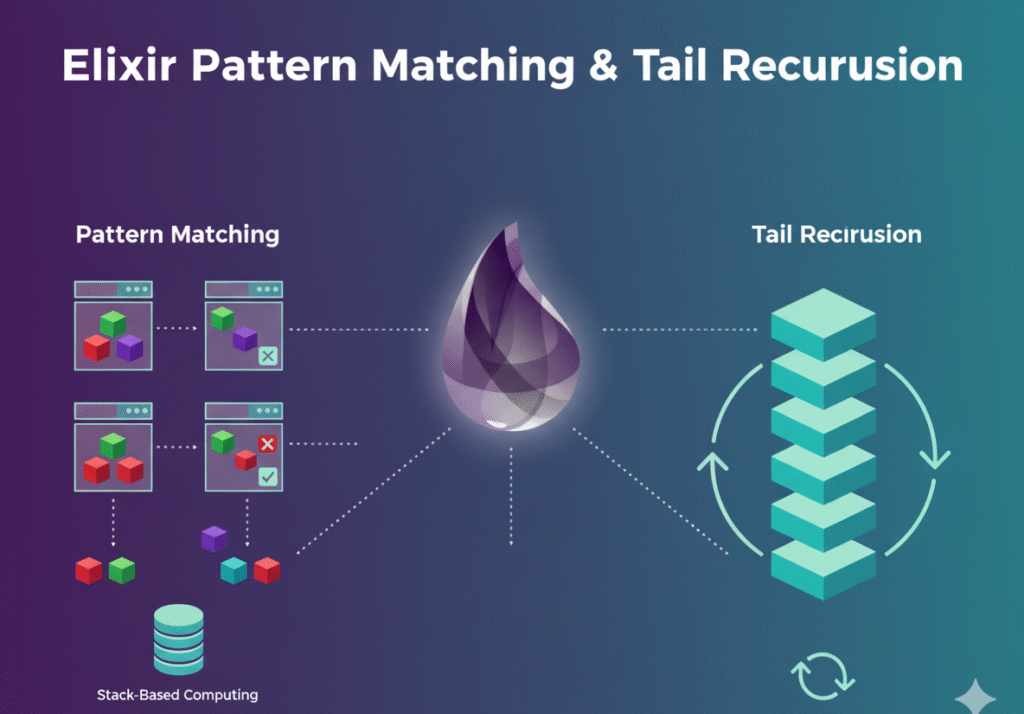
Discover how functional programming paradigms eliminate stack overflow fears and create more elegant, efficient code with the help of Pattern Matching The Stack Overflow Nightmare Every developer has been there. You’re working on a recursive algorithm, feeling confident about your elegant solution, when suddenly — STACK OVERFLOW. Your beautiful recursive
A Deep Dive into Developer Satisfaction Year after year, when Stack Overflow releases its Developer Survey, one result consistently surprises people: Phoenix, Elixir’s web framework, tops the “Most Loved” web frameworks list, often beating popular choices like Express.js, Django, Spring Boot, and Go’s various frameworks. This isn’t a fluke or
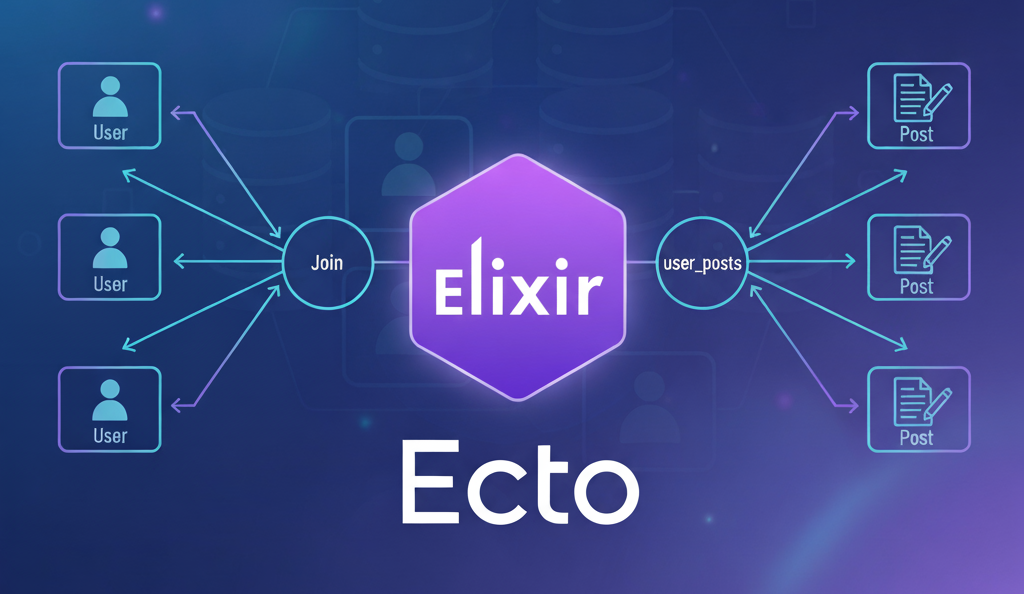
Today we are going to talk about a very common scenario which we face when designing any application i.e. Many-Many relationship between the tables. As I have seen it’s a very common issue arise working with Ecto, new users of elixir face a bit of difficulty while working with it.
Parsing is everywhere in software development — from configuration files to query languages, from log analysis to domain-specific languages. Yet many developers shy away from building custom parsers, thinking they’re complex and difficult to maintain. Enter NimbleParsec, an Elixir library that makes parser construction not just approachable, but genuinely enjoyable.
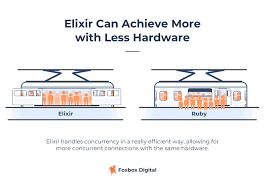
The web development landscape has changed dramatically since Ruby on Rails revolutionized it in 2004. What once felt like magic now shows its age in a world demanding real-time interactions, massive concurrency, and bulletproof reliability. It’s time to have an honest conversation about why Rails, despite its historical significance, is